Drivers with a warning light on, booked into your bay.
A repair shop doesn’t need more clicks. It needs the driver whose dash just lit up, or the fleet manager with a van pulling to one side, to reach your service desk before they try the shop down the road. We build the campaigns by kind of repair, carry the ad spend and deliver each request with the consent on record. You pay a price per lead agreed up front, and the diagnosis, the estimate and the work are yours.
A light on at breakfast, a fixed car by evening, and nobody at the counter played phone tag.
One repair shop, one Tuesday. Each request time-stamped, each step counted.
How shops work with us
A driver asks you to look at the car. The price you pay is for that request.
A repair is sold at the service desk, once someone has heard the noise or read the code, which makes a repair shop a pay-per-lead business. The pages, the ads and the spend are on our side. When a driver or a fleet within reach of your shop asks for help with the kind of work you take, you pay for that lead, at a price fixed before anything goes live. How far we carry each one before it reaches you is up to you: the request on its own, a drop-off booked into an open bay, or the driver put through live to your service writer.
- You decide the kinds of repair, how far from the shop and what makes a lead qualified, in writing, before launch
- Each request carries its consent record: the wording on the page, the page itself, the time
- Nothing to fund for ads and no retainer. What you pay per lead is the full cost
- The tier that fits your service desk is settled on the first call. See how each tier is priced
Every service, through a repair shop’s eyes.
The same nine services do different work for a repair shop than for a dentist. Here’s what each one is for when the business is getting people back on the road.
Kinds of repair
Warning lights today, a transmission next week, a fleet every month.
A driver who just saw the check-engine light, a family told their transmission is slipping and a contractor whose work trucks need service every few thousand miles want different answers, on different clocks. So each kind of repair runs as its own campaign, with its own pages and its own questions, and only for drivers close enough to bring the car in. Turn diagnostics up when the bays have room, and pause body work when the paint booth is booked solid.
- Diagnostics and warning lights, brakes, suspension and steering
- Transmission service, repair and rebuilds
- Collision and body work, from a scraped bumper to a car that came in on a flatbed
- Tires and alignment, and fleet accounts for vans, pickups and work trucks
Estimates and approvals
The car is on the lift. The owner is at work.
Most drivers aren’t standing at the counter when your tech finds the problem, and a bay sits idle while the service writer leaves voicemails. So the estimate goes out by text with photos of what the tech saw, the owner taps to approve the work they want, and the approval is stored on the record with the time it came in. Many states set rules for how a repair is authorized, so the approval step is built around the rules where you work.
- The estimate sent by text, with photos and a short note from the tech
- Approve the whole job or line by line, and decline the rest without a phone call
- Each approval stored with its time and the estimate it covers
- Or take the call live: a live transfer puts a new driver on the line with your service writer
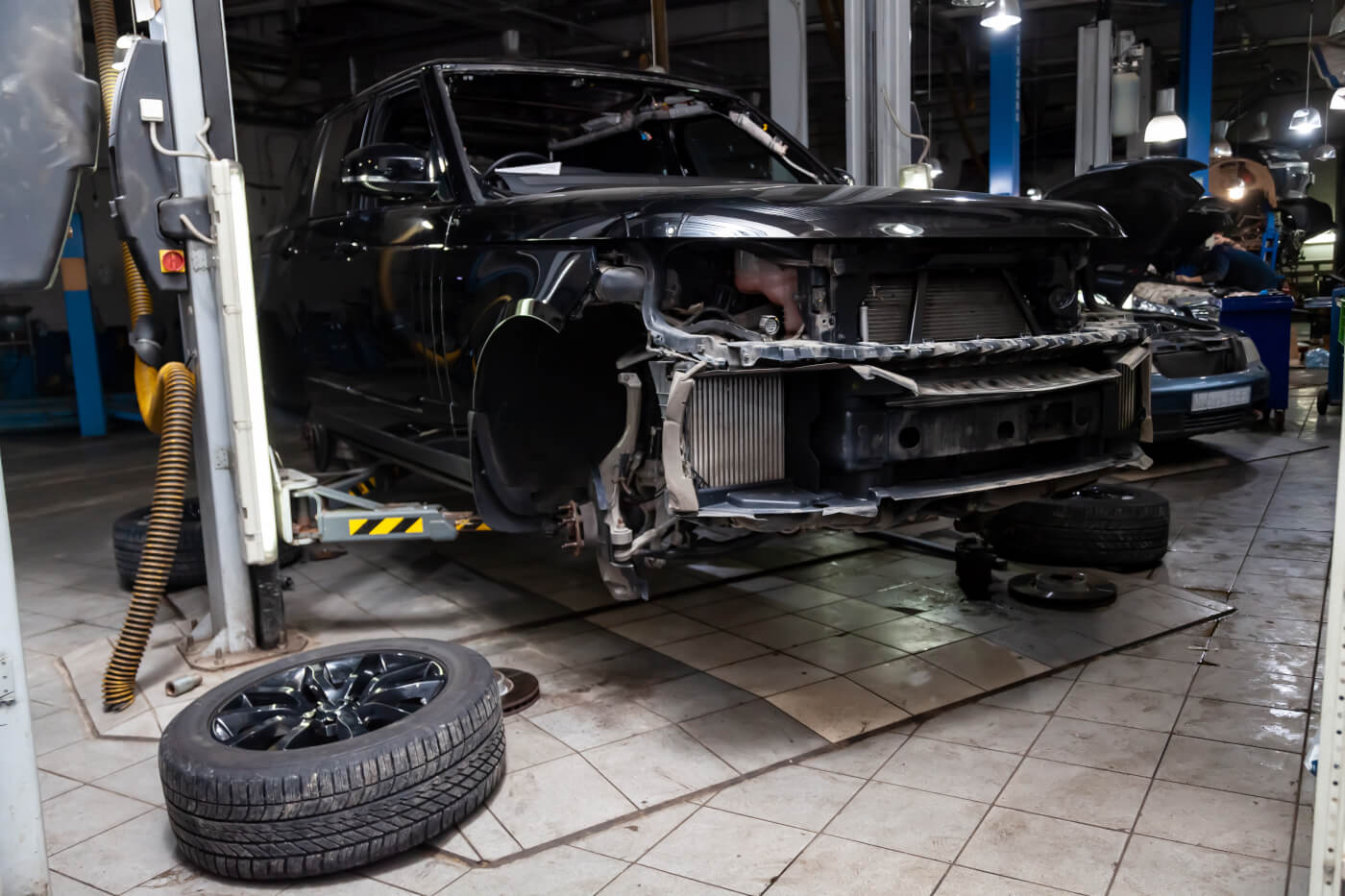
Collision and body work
After a crash, people want a shop that explains the next step.
Someone whose car was hit in a parking lot is rattled, dealing with an insurer and unsure who to trust with the repair. So the collision pages answer the questions they arrive with: how you handle insurance claims, in words you approve, whether they can get a ride or a rental, and how to send photos before coming in. The request reaches you with the pictures and the claim details already attached, so the first visit is an estimate, not an interview.
- Photos of the damage uploaded from a phone with the request
- Claim details collected up front when the driver has them
- How you work with insurers, written with you and approved before it runs
- Consent wording, time and page stored with every request
Reminders and reviews
Most of a shop’s work walks back in on its own, if someone reminds it.
A driver who trusts a shop keeps coming back for the next oil change, the next set of tires and the inspection due in the spring, but only if the reminder reaches them before a quick-lube sign does. So the same system that answers new requests looks after the cars you’ve already fixed: reminders timed to each vehicle, the review ask once the car is back home, and a reply to every review that comes in.
- Service reminders by vehicle: oil changes, rotations, inspections, seasonal tire swaps
- The review ask timed to pickup, one tap to Google
- Every review answered: drafted for you, approved by you
- A customer list that’s yours, always, exportable

What we count
Requests, booked bays, approved repairs. Not clicks.
A repair shop’s numbers live at the service desk: how many drivers asked, how many cars came in, how many estimates were approved, how many repair orders were paid. Each lead shows up in your CRM as it comes in, so your desk sees it at the same moment we do. Where your agreement includes reporting, that report covers the rest in plain English: which kinds of repair and which neighborhoods are producing, and what changes next.
- Every lead in your CRM on arrival, with the vehicle, the symptom and its consent record
- Time to first contact and drop-offs booked, by service writer and kind of repair
- Approved estimates and paid repair orders, as your desk marks them, so we tune the work that pays
- Leads that don’t meet the definition credited or replaced, the way your agreement says
Businesses that close at a counter or on a call, on the record: see their stories · what a lead means in the agreement.
Buying auto repair leads? Ask these ten questions first.
What to put to any lead seller, us included: whether the same driver goes to other shops, how consent is recorded, and what happens when a request turns out not to be a repair.
Straight answers.
What shop owners ask us.
Does the same driver get sent to other shops too?
Your agreement answers that in writing before the first campaign goes live, so you know before a single lead arrives. Every lead seller should be asked the same thing, which is why the free vetting guide puts it near the top of its list.
Which repairs and how far from the shop can you run?
The work your bays and techs take on, for drivers close enough to bring the car in: diagnostics, brakes, transmissions, collision and body work, tires and alignment, and fleet accounts. Each runs as its own campaign, so one can be turned up or paused without touching the others.
Can customers really approve repairs by text?
Yes. The estimate goes out with photos and the tech’s note, the owner approves the lines they want, and the approval is stored with its time and the estimate it covers. Many states have rules on how a repair is authorized, so the step is set up around the rules where your shop operates.
Who answers the phone when the service writers are busy?
Your team, first. For shops that want it, an AI voice can pick up the calls the counter can’t, take the vehicle and the symptom, book a drop-off and hand the caller to a person whenever one is needed. You approve what it says before it goes live, and texts go out only at hours messaging rules allow.
Why pay per lead and not a monthly fee?
Because a repair starts with a driver asking for help and is closed by your service writer, so the request is the part worth paying for. That lifts a decision off you: there’s no weighing one model against another. What’s left is how far we take each lead before it reaches you (the request, a booked drop-off or a live transfer), and that gets settled on the call. You never open an ad account or top up a budget: the campaigns, the pages and the spend sit with us.
What if a lead isn’t a real repair?
A request that falls outside the definition in your agreement (a duplicate, a driver too far away, no way to reach them) is credited or replaced on the terms you signed. Whether an estimate turns into an approved repair is up to your desk, and the price of the lead never depends on it.
Not quite a repair shop?
Neighbors in the auto family, and a trade that answers the same stranded-driver call. A car wash sells to customers who buy on their own, so its page shows the managed way of working.
A muffler shop, a detailer, something else entirely? Browse all sixty industries or tell us how your shop runs.
Let’s look at where your next repair orders come from.
The free marketing audit looks at your map listing, your reviews, how your site works on a phone in a parking lot and how long a repair request waits for an answer, written up in the order to fix it. Or go straight to a call.